The sequel that added rising soda, frosting, honey and a fish that hunts down whatever you still need.
Candy Crush Soda Saga is the sequel that had to justify its own existence, and it does so by changing the one thing the original never touched: the physics of the board. The swap mechanic is identical. What is different is that in Soda, the pieces do not always fall downward, the board is not always the same shape by the end of the level, and each level type rewrites a rule you thought was fixed.
How it plays
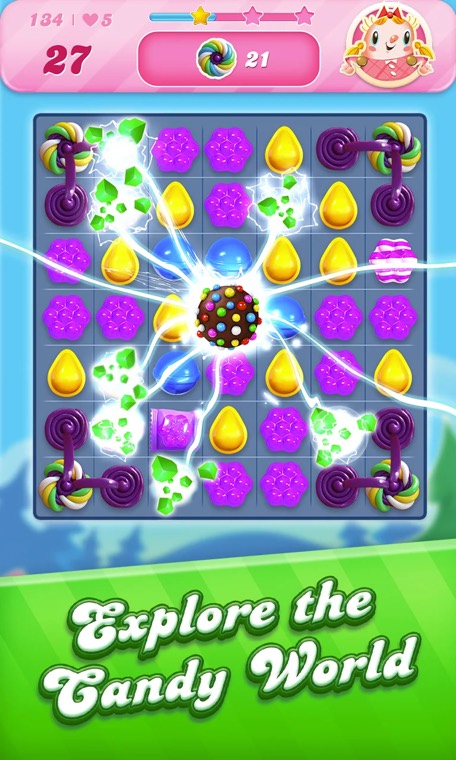
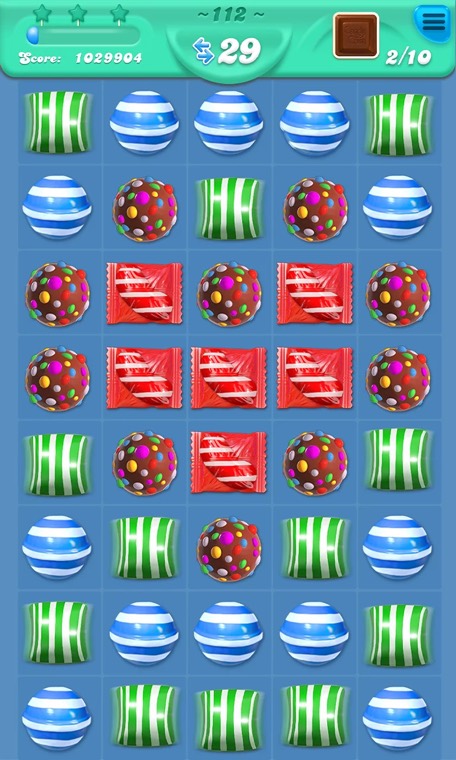
As in the original, you swap two adjacent sweets to line up three or more. Four in a row makes a striped candy, an L or T of five makes a wrapped candy, five in a line makes a colour bomb, and combining two specials produces a much larger effect. If you have played Candy Crush Saga, you can play this without reading anything.
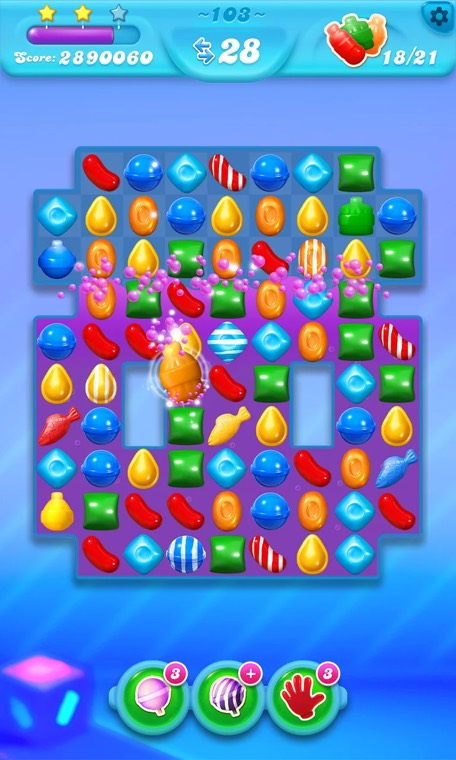
The addition is the Swedish fish, created by matching four in a square. When triggered, fish swim to whatever the level currently needs — an uncleared jelly, a trapped bear, a remaining objective — which makes them unusually valuable on levels where the last few targets are scattered in awkward corners.
The level types are the game
Soda's identity is its level variety, and each type genuinely changes how you should play:
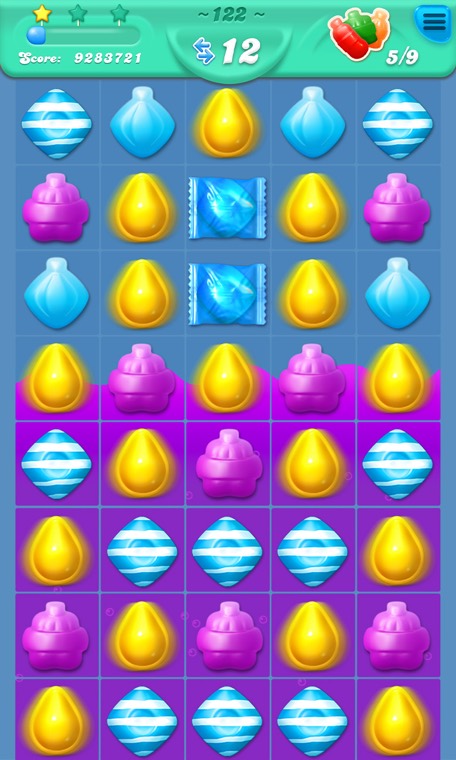
- Soda levels — matching purple sweets releases soda, which raises the liquid level and floats bottles or bears upward. Pieces above the soda line float instead of falling, which inverts the usual bottom-of-the-board rule.
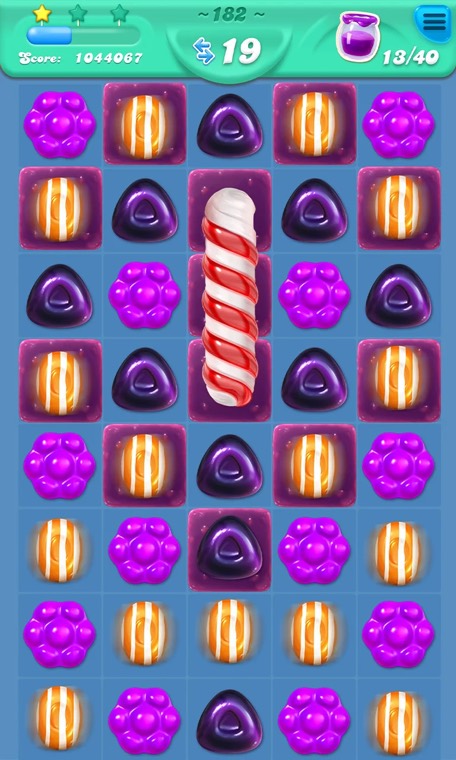
- Frosting levels — pieces are locked in ice that takes one or more adjacent matches to break. Slow, methodical levels where planning matters more than luck.
- Honey levels — bears are stuck in honey and must be freed by matching next to them. Reaching the far corners is the whole challenge.
- Jam levels — jam spreads across the board from a starting square when you match on top of it; you need to cover every square. Chain reactions are worth far more here than anywhere else.
- Chocolate levels — chocolate grows every turn unless you clear it, so wasted moves compound.
The rule that trips everyone. On soda levels, gravity is not constant. Once the liquid rises, pieces above the line float upward rather than falling. Habits built in the original game actively work against you here — check which way the board will settle before committing to a swap.
Difficulty and generosity
Soda is generally considered a little kinder than the original in its early stretch, and our replay agreed: the first hundred levels are more forgiving and the objectives are more clearly signposted. The lives system is the same five-attempt, half-hour-refill arrangement, and the same commercial pressure appears at episode boundaries.
Where Soda is genuinely better is the pacing of new ideas. Because each level type has its own physics, the game has a much larger supply of novelty than a single-mechanic match-3, and it spends that supply steadily rather than all at once.
Does it hold up?
If you liked the original and got bored of it, this is the version that fixes the boredom. If you have never played either, the original is the better tutorial and Soda is the better long-term game. The interface carries the same accumulation of events and pop-ups as its predecessor, which remains the main thing to tolerate.
Tips that actually made a difference
- Identify the level type before your first move. Soda, frosting, honey, jam and chocolate levels each reward completely different play. The type is shown at the start.
- On soda levels, remember gravity flips. Once the liquid rises, pieces above it float upward. Plan your matches for where pieces will end up, not where they are.
- On jam levels, chase chain reactions. Jam spreads wherever you match, so a single move that triggers several cascades covers far more board than a big flat match.
- Clear chocolate every single turn. Chocolate grows if left alone. One ignored square becomes four, and by the end of the level the board is unplayable.
- Build fish for scattered objectives. Four in a square makes a Swedish fish, which seeks out whatever is left. On a level with three bears in three corners, that is worth more than any striped candy.
- On frosting, break outward from the middle. Ice takes repeated adjacent matches. Starting in the centre gives you more adjacent squares to work with than starting at an edge.
- Do not rush the final objective. Soda levels frequently end with a single bear one row from the top. Spending two setup moves is better than three wasted ones.
The honest summary
What works
- Genuine variety — five level types with different physics
- The Swedish fish makes awkward final objectives solvable
- Slightly kinder early difficulty than the original
- New ideas arrive steadily rather than all at once
- Runs well on modest Android hardware
What grates
- Interface is as cluttered with events and pop-ups as the original
- Soda-level gravity inversion is under-explained and catches everyone out
- Later episodes reuse layouts with cosmetic changes
- Same episode-boundary difficulty spikes and purchase prompts
Verdict. The most varied match-3 on this list, and the right choice if the thing you dislike about the genre is repetition. Learn the five level types properly in the first hour — especially the soda gravity rule — and it stays interesting for far longer than a single-mechanic puzzle would.
Download. Candy Crush Soda Saga is free to install from Google Play and contains optional in-app purchases. We earn nothing from the link below — it points at the official listing by King.