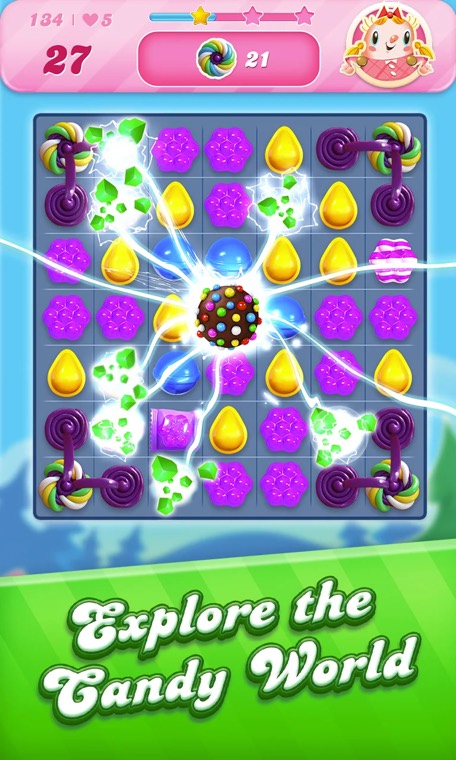
King · Match-3 puzzle
Swap two neighbouring sweets to line up three or more. Thousands of levels, four objective types and a special-candy system that rewards planning over speed.
We play the big casual puzzle apps properly — a few hundred levels each, on ordinary Android phones — and write down what actually helps: how the pieces combine, which power-up is worth saving, where the difficulty spikes are, and whether the game is still fun once the tutorial glow wears off. Every review links straight to the official Google Play listing so you can install the real thing.
Each review covers what the game is, how the board and power-ups work, the tips that made the biggest difference for us, an honest list of drawbacks, and a direct link to the official Google Play page.
Swap two neighbouring sweets to line up three or more. Thousands of levels, four objective types and a special-candy system that rewards planning over speed.
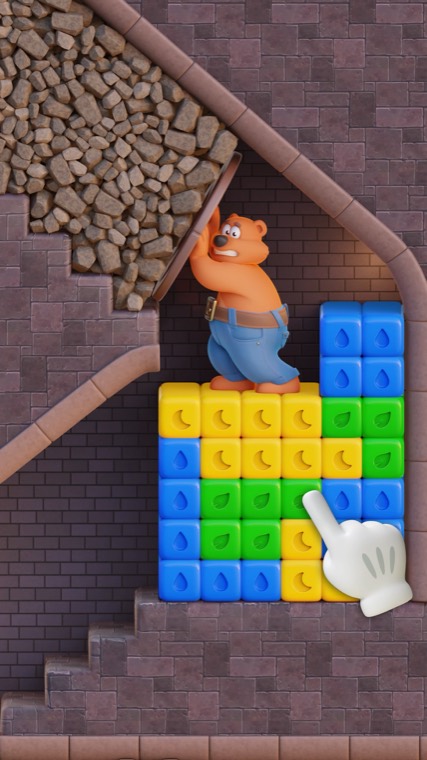
A blast puzzle rather than a swap puzzle: tap any two touching cubes of the same colour. Bigger groups create stronger power-ups, and teams share lives.
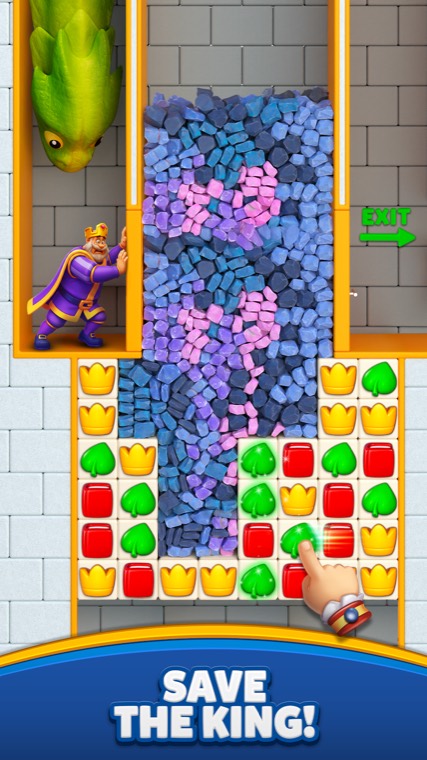
Help King Robert restore his castle. Levels are short, power-ups combine generously, and the renovation meta gives every star a purpose.
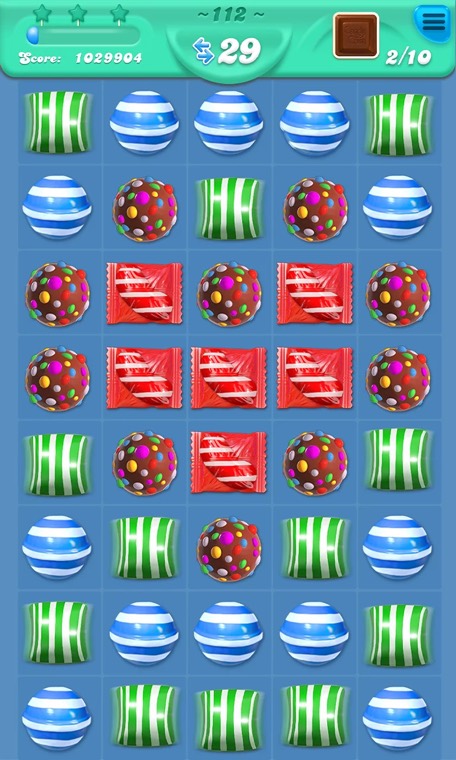
Same swap mechanic as the original, but every level type changes the physics — soda floats pieces upward, frosting freezes them, honey traps them.
| Game | Type | Play Store rating | Installs | Core input | Stands out for | Download |
|---|---|---|---|---|---|---|
Candy Crush SagaKing |
Match-3 puzzle | 4.5 ★ 38.9M reviews |
1B+ | Swap two adjacent pieces | Longest level list | Download freeGoogle Play |
Toon BlastPeak |
Tap-to-clear blast puzzle | 4.5 ★ 4.63M reviews |
100M+ | Tap a group of touching cubes | Easiest to learn | Download freeGoogle Play |
Royal MatchDream Games |
Match-3 puzzle + castle renovation | 4.5 ★ 10.6M reviews |
100M+ | Swap two adjacent pieces | Most generous combos | Download freeGoogle Play |
Candy Crush Soda SagaKing |
Match-3 puzzle | 4.5 ★ 8.86M reviews |
500M+ | Swap two adjacent pieces | Most level variety | Download freeGoogle Play |
Ratings and install counts as shown on Google Play (New Zealand store) at the time of writing. Figures change over time — the linked listing is always the current source.
Every casual puzzle app looks more or less the same in a store screenshot: a colourful board, a counter in the corner, a cheerful character somewhere near the edge. Install four of them and the differences show up within an hour. Some respect your time and some are engineered to waste it. The reviews on this site exist to tell you which is which, before you have sunk three evenings into finding out.
We install the game from Google Play on a normal mid-range Android phone — not an emulator, not a tablet — and play at least 150 levels without spending money. That number matters. Almost every casual puzzle is generous for the first fifty levels, because that is the stretch designed to convince you the game is easy. The real character of a game shows up somewhere between level 80 and level 200, when the objective types stop being introduced one at a time and start being combined.
We note where we got stuck, how long the stuck levels held us, what the game offered us at that moment, and how it behaved when we declined. Then we go back and check whether the tips that circulate online actually work, or whether they are folklore repeated between forums.
In a well-built match puzzle, a good move and a lazy move produce visibly different boards. You can watch a single considered swap clear half a column while a rushed one achieves nothing. If two very different levels of care produce the same result, the game is not really a puzzle — it is a slideshow with a progress bar, and it will stop being interesting quickly.
The reliable test is simple: play twenty levels quickly, then play twenty levels slowly and deliberately. If your success rate barely moves, the game is not rewarding thought.
Every game in this category builds special pieces out of larger matches — rockets, bombs, colour clears, whatever they are called locally. Good design makes their effect obvious before you use them and spectacular when you combine two. Bad design hides the rules, so you never learn whether saving a piece was worth it. Royal Match is the clearest example of the former; the combination effects are big, legible and consistent, so you learn them in one session.
This is where casual puzzles differ most, and where they deserve the most scrutiny. Every one of them uses a lives system: you get five attempts, a failure costs one, and they refill over roughly half an hour. What matters is what the game does with that moment. Some offer a modest booster and move on. Some throw a purchase screen at you with a countdown. Some quietly make the next attempt easier.
Our position is straightforward: a level you cannot beat should feel like a puzzle you have not solved, not a toll gate. When a game starts behaving like a toll gate, we say so in the review.
Pure level ladders get monotonous. The strongest games in this category attach a second activity to the puzzle — restoring a castle, decorating a garden, running a team with friends — so that finishing a level produces something visible. It is a small psychological trick and it works, provided the second activity is not simply another currency sink.
Every game on this page sits between 4.4 and 4.6 stars, which on the face of it says they are all equally good. They are not, and the reason the numbers cluster is worth understanding before you use them to choose.
A casual puzzle rating is dominated by players who are still enjoying the game, because that is when the rating prompt appears — usually right after a satisfying clear, rarely after a fifteenth failure. Ratings also accumulate over a decade in some cases, so a score can reflect what a game was like years and several monetisation redesigns ago. And review counts differ by two orders of magnitude here: nearly 39 million for Candy Crush Saga against 4.6 million for Toon Blast, which makes the two numbers far less comparable than they look side by side.
What the rating is genuinely useful for is spotting outliers. A casual puzzle sitting below about 4.2 has usually done something specific to annoy people — an aggressive update, broken progress syncing, or a monetisation change that landed badly. Above that line, the number stops discriminating and you are better off reading about the mechanics, which is what the rest of this site is for.
On spending money. All four games are free to install and free to finish; the purchases are optional convenience. If you do decide to spend, decide the amount in advance and use Google Play's own purchase controls to enforce it. Nothing on this site earns a commission from those purchases.
Moss Paradox is a review blog. We do not host or operate any game, we do not sell in-game currency, and we have no relationship with the publishers we write about. There is no gambling, betting or play-for-money content anywhere on this site — the apps we cover are ordinary casual entertainment puzzles with no cash prizes of any kind. The only thing sold here is a set of PDF guides — plain written documents, ordered through a request form and emailed to you. No payment is processed on this website at any point.
No. Moss Paradox is a review blog — there is no playable game here. Every review links to the official Google Play listing, and you install the game from there.
All four are free to install and can be completed without spending anything. Each one contains optional in-app purchases, which we flag in every review.
No. There are no affiliate links, no sponsored posts and no paid placements. The Google Play links are plain store links.
They are the official screenshots published by each developer on their Google Play listing, reproduced here for review and identification. All rights remain with the respective publishers.
No. These are casual entertainment puzzles with no wagering, no cash prizes and no play-for-money mechanics. This site offers none either — see the Financial Disclaimer.
Editorial notice. Moss Paradox is an independent review site. We are not affiliated with Google LLC or with any game publisher mentioned here, we receive no payment from them, and we do not operate any game. All games covered are free casual puzzle apps on Google Play that contain optional in-app purchases. This site is not a casino and provides no gambling, betting or play-for-money activity of any kind — see our Financial Disclaimer.